
In the 21st century, thanks to the rapid development of computer science, smart home technology has become increasingly popular and is now a part of many households. As smart devices continue to enter our daily lives, consumers are no longer satisfied with just functionality—they also care about the look, feel, and longevity of their products. Ever noticed how some smart locks feel cool and smooth to the touch, or how certain smart speakers instantly give off a premium vibe? Behind these details lies an unsung hero: aluminum die castings.
Aluminum die casting is a process where molten aluminum alloy is injected into a precision mold under high pressure, creating complex metal parts in a short time. originating in the early 20th century, it has since become a cornerstone of modern manufacturing, especially in the consumer electronics and smart home industries.
So, why is aluminum die casting such a perfect match for smart home devices?
• High precision shaping: Ideal for thin-walled, intricate, and compact designs required by modern smart products.
• Lightweight advantage: With a density of only 2.7g/cm³ (about one-third of stainless steel), aluminum is perfect for portable and easy-to-install devices.
• Excellent heat dissipation: Aluminum’s thermal conductivity (96–126 W/m·K) ensures effective cooling for electronic components.
• Versatile surface finishing: From anodizing to powder coating, aluminum supports a wide range of finishes to achieve premium aesthetics.
Notably, alloys like 6061 and 6063 are widely used for smart home casings due to their balance of strength, corrosion resistance, and surface treatment options. In fact, as of 2024, aluminum die castings account for over 64% of the smart lock market.
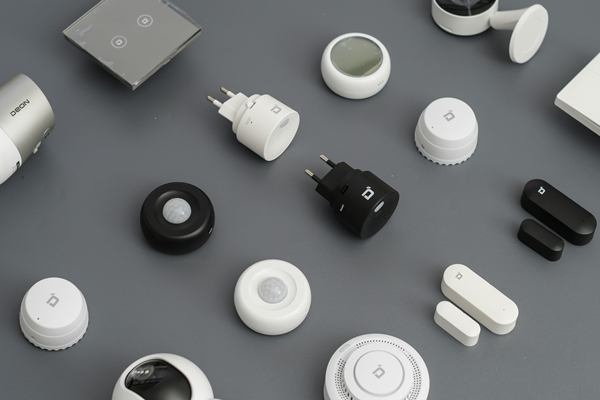
1. Premium Surface Finishes
Aluminum parts can be treated to achieve various stylish effects:
o Anodizing: Adds color options like champagne gold, space gray, olive green, or coral orange.
o Sandblasting: Creates a matte, fingerprint-resistant surface.
o CNC polishing: Delivers a mirror-like finish for a high-end appearance.
o Micro-arc oxidation: Produces a ceramic-like texture with excellent hardness and wear resistance.
For example, high-end smart locks often feature multilayer anodized surfaces with hardness levels comparable to sapphire glass, ensuring scratch resistance.
2. Seamless Design Freedom
Die casting allows one-piece construction with fewer joints and screws, resulting in sleek, minimalist designs. Examples include:
o Smart speakers with smooth, seamless casings.
o Compact gearboxes for motorized smart curtains.
o Integrated smart lock panels combining fingerprint, password, and card recognition.
1. Strength Without the Weight
o Tensile strength: 200–310 MPa
o Yield strength: 170–276 MPa
o Elongation: 7–12%
These properties make aluminum strong enough to resist impacts and stress while remaining lightweight. For instance, aluminum smart lock panels can withstand forced entry attempts far better than plastic or zinc alternatives.
2. Natural Heat Management
Long-running devices like routers and gateways often overheat. Aluminum’s thermal properties—such as high conductivity and efficient heat transfer—make it a natural cooling solution, extending the lifespan of electronics.
3. Corrosion and Oxidation Resistance
With proper surface treatment, aluminum can easily handle humid or coastal environments. Anodized coatings, nickel plating, or powder coatings provide layers of protection that can pass 500+ hours of salt spray testing without rust.
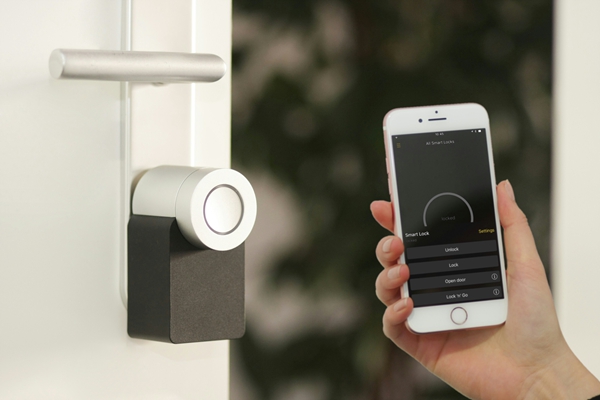
• Smart Locks: Premium models use aerospace-grade 6063 aluminum with CNC machining and anodizing, achieving lighter weight (40% less than zinc) and triple the corrosion resistance.
• Smart Speakers: Aluminum die cast frames reduce vibration, improve sound quality, and enhance heat dissipation.
• Smart Control Panels: Aluminum frames provide strength, cooling, and seamless integration into home interiors.
Future Trends: Where Aluminum Die Casting Is Heading
• Advanced Techniques: Vacuum die casting, semi-solid die casting, and squeeze casting for higher quality and thinner designs.
• New Materials: Silicon carbide composites, high-conductivity alloys, and eco-friendly recycled aluminum with reduced carbon footprint.
• Integrated Functions: Die castings that combine structure with built-in antennas, heat sinks, or embedded circuits.
When choosing a device, check for:
1. Weight: Aluminum feels balanced—not too heavy (like zinc) and not too light (like plastic).
2. Surface quality: Even finish without defects or discoloration.
3. Edges: Smooth, burr-free transitions.
4. Markings: Clear alloy type or process standard.
5. Feel: Cool to the touch, solid, and premium.
Aluminum die castings are more than just housings—they are an essential part of what makes smart home products stylish, functional, and durable. With ongoing advances in materials and processes, aluminum die casting will continue to shape the next generation of smart living, offering products that look better, last longer, and perform more reliably.
When shopping for smart home devices, paying attention to materials and manufacturing techniques can help you make a smarter choice. A well-crafted aluminum casing is not only a sign of quality but also a promise of durability in the connected homes of the future.
Hotline
0512-67371602
E-mail:sales@edt-china.cn
Add:West Building, 66 Songshan Road, Suzhou New District, P.R. China

Hotline