
Aluminum alloy smelting is the core stage in the production of aluminum alloy die castings, directly determining the final product's mechanical properties, surface quality, and service life. With the increasing demand for lightweight, high-strength structural components in industries like automotive, electronics, and telecommunications, quality control in aluminum alloy smelting has become particularly critical. Especially for high-standard applications such as custom automotive die castings, meticulous management of the smelting process forms the foundation for ensuring part consistency and reliability. This article will systematically elaborate on the key quality control points in aluminum alloy smelting from four aspects: charge material control, melting process management, slag control, and refining treatment, providing practical guidance for aluminum alloy die casting parts manufacturers.
The microstructure of aluminum alloys exhibits heredity, meaning the quality of the charge materials directly impacts the quality of the final castings. Charge materials include alloy ingots, master alloys, and returns (which consist of both unmelted and remelted returns). Therefore, strict control over charge material quality is a prerequisite for producing high-quality die castings.
The chemical composition of alloy ingots and master alloys must comply with international or national standards. Their surfaces should be clean, smooth, and free from oil stains, mildew, or heavy oxide scale. Severe surface oxidation requires shot blasting for removal. The fracture structure should be dense, without significant segregation, shrinkage cavities, slag, or inclusions.
Returns include scrap castings, biscuits, runners, flash and burrs, machining chips, and the bottom residue (below 100mm) from crucibles. They must be strictly categorized, managed, and kept separate to avoid contamination. Returns should be clean, free from oil, rust, sand, moisture, filter screens, or inserts. Seriously contaminated returns (oily/ muddy), damp chip returns, and crucible bottom residue must be remelted, deslagged, degassed, cast into ingots, and verified for chemical composition before reuse.
Charge materials should be stored in a dry, ventilated warehouse away from direct sunlight. Storage time should be minimized to prevent moisture absorption and oxidation. Before smelting, materials must be baked to remove moisture and prevent molten aluminum splash. Baking should occur at 300~350°C for no less than 2 hours. Alternatively, materials can be pre-heated near the furnace before charging.
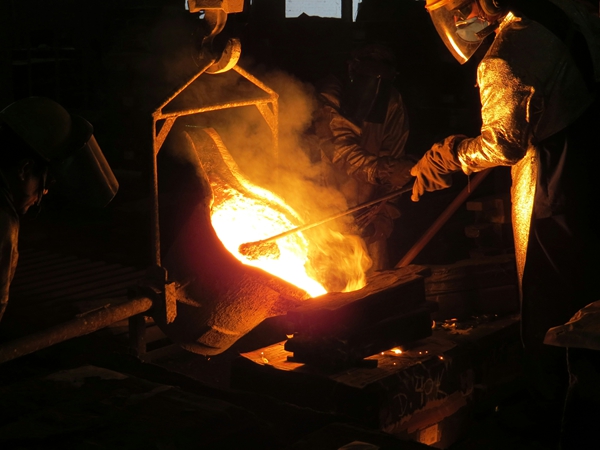
Requirements for aluminum alloy melting equipment are as follows:
① Determine melting rate based on die casting machine capacity. Fully utilizing equipment capacity reduces costs and improves economic efficiency.
② Select high-efficiency melting and holding furnaces. Furnace performance is primarily evaluated by measuring energy consumption for melting or holding a specific amount of molten metal.
③ Choose burners with low oxidation characteristics to create a reducing atmosphere inside the furnace, minimizing metal loss (burn-off) and alloy composition changes.
④ Enable precise control over charge weight, feeding time, melting time, holding time, melting temperature, tapping temperature, tapping time, fuel consumption, and alloy loss.
⑤ Facilitate molten metal treatments such as degassing, deslagging, and refining.
⑥ Allow easy furnace cleaning to prevent the entrainment of impurities (oxides, furnace lining).
For aluminum alloy die casting, quality management during the melting process is particularly vital due to its production characteristics. Melting tools like crucibles, ingot molds, bells, skimmers, and ladles must be thoroughly cleaned of residual metal, slag, and oxide scale before use to ensure correct casting chemistry. Graphite crucibles and coated cast iron crucibles are primarily used for melting aluminum. Metal loss in crucible furnaces is typically 1%~2%, compared to 5%~25% in non-crucible types. Graphite crucibles help prevent excessive iron (Fe) pickup in the melt but must be inspected via ultrasonic testing before use for cracks, perforations, or significant deformation, especially before first use, where baking as prescribed is necessary to remove moisture and prevent cracking. Melting tools should be preheated and coated with a protective coating, then further preheated at 200~300°C for at least 1 hour to prevent aluminum splash and Fe pickup. The service life of coated tools is limited by coating integrity, generally not exceeding 48 hours.
The general principle for charging is to add easily meltable materials first, followed by harder-to-melt materials after superheating, relying on diffusion, dilution, and dissolution. The typical charging sequence is: returns first, then master alloys, and finally alloy ingots. Scrap castings, biscuits, and runners, classified as secondary returns, should constitute less than 40% of the charge. When preparing alloys in-house, element burn-off must be considered. Typical burn-off rates (by mass fraction) are: Al ~1.5%, Si ~2%, Cu ~1%, Mg ~20%, Mn ~2.5%.
Common inclusions in aluminum melts include Al₂O₃, Al₂O₃·xSiO₂, Al₄C₃, MgO, and spinels (like MgAl₂O₄), with Al₂O₃ being the most prevalent, accounting for 0.002%~0.02% of the melt mass. Research categorizes Al₂O₃ in the melt into three types:
① Large, unevenly distributed clusters with sizes ≥20nm.
② Evenly distributed, fine flakes (10~20nm) removable by refining treatment.
③ Evenly distributed, ultra-fine flakes (<10nm) that are difficult to remove completely through refining, dispersed throughout the melt. This last type is a primary factor in melt degradation and the main carrier of hereditary effects, directly impacting die casting quality.
During the smelting of die-cast aluminum alloys, solid compound deposits often form on the furnace hearth, commonly referred to as slag or dross. If entrapped in the casting, this material forms inclusions.
Slag primarily consists of compound grains containing aluminum, silicon, and excess iron, manganese, chromium, etc. It reduces effective furnace capacity and, due to its high melting point, density, and extreme hardness, can cause numerous detrimental effects. These include increased melt viscosity, die sticking (soldering), hard spots in castings that shorten tool life, and reduced melt fluidity within the die cavity.
Based on practical production trials and research, an empirical formula for the slag formation coefficient of YZAISi8Cu3 alloy is:
Slag Formation Coefficient = (1 × Fe%) + (2 × Mn%) + (3 × Cr%)
Practice shows that at a holding furnace working temperature of 678~681°C, the permissible slag coefficient is 1.8. This means no slag forms at the furnace bottom if the coefficient does not exceed 1.8 under these conditions. Raising the working temperature to 714~717°C increases the permissible coefficient to 2.2. However, simply increasing melt temperature to allow a higher slag coefficient is not a practical solution. Firstly, higher temperatures negatively impact die life and casting quality. Secondly, while a coefficient of 2.2 might be temporarily permissible, it leads to slag deposition where Fe, Mn, and Cr concentrations become far higher than in the bulk melt. To address the imbalance between the slag coefficient and melting temperature, two methods can be employed: 1) Using high-purity alloys to dilute Fe, Mn, and Cr levels (a costly approach); or 2) Regularly skimming slag from the furnace bottom under normal operating conditions.
Thus, slag formation results from a combination of temperature, alloy composition, and melting equipment. Iron is essential in die-cast aluminum alloys, typically present at 0.85%~1.00%. Therefore, Mn and Cr content must be strictly controlled to achieve a slag coefficient compatible with the melt's working temperature, thereby minimizing or preventing slag deposition. This control must be implemented in conjunction with appropriate working temperatures and suitable melting equipment.
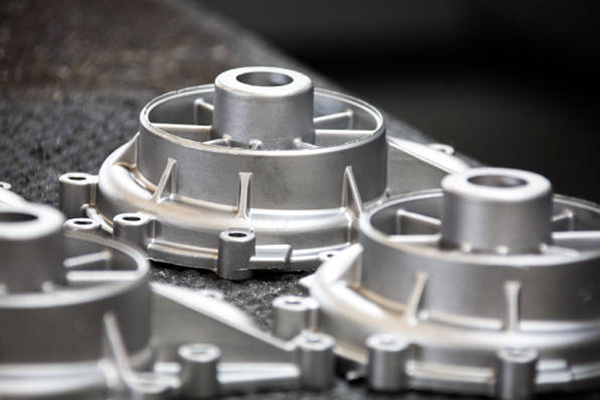
As demands for internal and external quality of die castings increase—with many parts now requiring pressure tightness and machinability—the role of refining treatment in controlling and improving the quality of aluminum alloy die castings can no longer be overlooked.
Historically, refining of die-cast alloys was neglected due to:
① Lower quality requirements for castings.
② Factory locations with dry climates resulting in less oxide formation on ingots.
③ High-volume, stable production with low return ratios and high new ingot usage.
④ Mismatch between melting furnace capacity and die casting machine demand (insufficient melt supply).
⑤ Cost considerations for die casting production.
⑥ Influence of traditional practices.
Additionally, because die-cast aluminum alloys are generally less responsive to refining than other casting alloys, and due to non-adherence to process specifications, the effectiveness of refining was sometimes not clearly evident.
The key to obtaining high-quality molten aluminum lies in using ideal, efficient refining agents and methods to maximally remove hydrogen gas and various inclusions, thereby purifying the melt.
Common refining agents include chlorine gas, chloride salts, hexachloroethane, nitrogen gas, and mixtures like 60% carnallite with 40% calcium fluoride. Chlorine gas is widely recognized as the most effective. Its refining mechanism is based on flotation, with reactions:
3Cl₂ + 2Al → 2AlCl₃
Cl₂ + 2[H] → 2HCl
Since hydrogen content in aluminum melt increases linearly with temperature and extends with holding time, melting time should be minimized. Particularly, the time from post-refining to the completion of casting should not exceed 4 hours, with strict temperature control.
Most die casting shops use round crucible furnaces, where effective refining is challenging. To address this, literature suggests using an oval crucible divided into two chambers (A and B) by a baffle at the short axis, with a gap left between the baffle and the crucible bottom. Chamber A serves as the clean holding/tapping zone, and Chamber B as the melting/refining zone, allowing for effective melt quality control. The operating method is:
① During the first heat, charge both chambers. After melting, refine in both to obtain the first batch of clean melt.
② During production, Chamber A feeds the shot sleeve. When its level drops, add charge to Chamber B. This causes the already melted and refined metal from B to flow through the bottom gap into A.
③ Once the newly charged material in B is melted, heat to 700~720°C and perform refining.
Adhering strictly to refining principles is essential to prevent porosity and inclusions in castings. A "prevention first, removal second" approach must be implemented. "Prevention" means strictly preventing moisture and contaminants from entering the melt. "Removal" means eliminating oxide inclusions and hydrogen from the melt. Correct implementation of these measures relies on specific melting practices, including preparation and treatment of refining equipment and tools, preparation of fluxes and modifiers, refining and modification techniques, stirring operations, and pouring—all closely related to molten aluminum quality control.
Die-cast aluminum alloy smelting is a systematic process with high technical requirements, involving multiple stages: charge selection, melting control, slag suppression, and refining purification. Establishing a rigorous quality management system for aluminum alloy die castings is the only way to achieve uniform composition and effective removal of gases and inclusions during the smelting process, thereby enhancing the overall performance of castings. For aluminum alloy die casting parts manufacturers engaged in custom automotive die casting, standardizing and refining the smelting process is paramount. Through scientific process design and execution, they can ensure every batch of molten aluminum meets high-quality standards, ultimately delivering reliable and durable die-cast products to their clients.
Hotline
0512-67371602
E-mail:sales@edt-china.cn
Add:West Building, 66 Songshan Road, Suzhou New District, P.R. China

Hotline