
Aluminum alloy die casting is an efficient and precise metal forming process that involves injecting molten aluminum alloy into a mold cavity under high pressure, followed by rapid cooling to form parts with complex structures, precise dimensions, and smooth surfaces. This process is particularly suitable for mass production and is widely used in industries such as automotive, electronics, home appliances, and aerospace.
Aluminum alloy is the material of choice for die casting due to its excellent fluidity, relatively low melting point (approximately 660°C), high strength-to-weight ratio, and outstanding corrosion resistance and thermal conductivity. Additionally, aluminum die-cast parts can be further enhanced through heat treatment, surface treatment, and other processes to improve their mechanical properties and durability.
Not all aluminum alloys are suitable for die casting. Ideal materials for this process should possess the following characteristics:
• Excellent fluidity to fill complex mold cavities;
• Low shrinkage rate to minimize deformation and porosity;
• High tensile strength and hardness;
• Good corrosion and heat resistance;
• Ease of subsequent processing and surface treatment.
Common die-cast aluminum alloys are primarily from the Al-Si series, such as A380 and ADC12, which are widely used due to their well-rounded performance.
1. Al-Si Series Alloys (e.g., A380, ADC12)
• Properties: High silicon content (typically 7%–12%), excellent fluidity, low shrinkage, good heat resistance, and suitability for casting complex thin-walled parts.
• Advantages: Good castability, high air tightness, and low cost.
• Disadvantages: Corrosion resistance may decrease with higher copper content.
• Applications: Automotive engine cylinder heads, motor housings, electronic enclosures, and household appliance components.
2. Al-Si-Mg Series Alloys (e.g., A360, AlSi10MnMg)
• Properties: Magnesium is added to the Al-Si base, significantly enhancing strength and toughness through heat treatment (e.g., T5, T6).
• Advantages: Excellent overall performance, high strength, and good corrosion resistance.
• Disadvantages: Heat treatment may cause deformation, requiring strict process control.
• Applications: Structural components, automotive body parts, and aerospace components.
3. Al-Mg Series Alloys (e.g., 5083, 5A06)
• Properties: High magnesium content (3%–6%), high strength, excellent corrosion resistance, and good weldability.
• Advantages: Strong resistance to seawater corrosion and good toughness.
• Disadvantages: Relatively poor castability and susceptibility to hot cracking.
• Applications: Marine components, chemical equipment, and outdoor structures.
4. Al-Si-Cu Series Alloys (e.g., YL112, A383)
• Properties: High copper content, offering outstanding strength, hardness, and wear resistance.
• Advantages: Good machinability, suitable for high-strength structural parts.
• Disadvantages: Relatively poor corrosion resistance.
• Applications: Gears, pump bodies, and mechanical components.
5. High-Strength and Toughness Die-Cast Alloys (e.g., SF-36, Castaduct-42)
• Properties: Developed in Germany, these alloys feature low iron, high manganese, and strontium content, delivering extremely high strength and toughness.
• Advantages: Suitable for high-stress and high-load environments.
• Disadvantages: Higher cost and complex processing.
• Applications: Automotive safety structural parts and body frames.
6. Heat-Treatment-Free Die-Cast Alloys (e.g., AlSi10MnMg)
• Properties: Achieve high performance in the as-cast state, avoiding deformation and blistering issues associated with heat treatment.
• Advantages: Energy-saving, shortened production cycle, and suitable for large integrated die casting.
• Disadvantages: Slightly lower strength compared to heat-treated alloys.
• Applications: New energy vehicle bodies, battery trays, and integrated structural components.
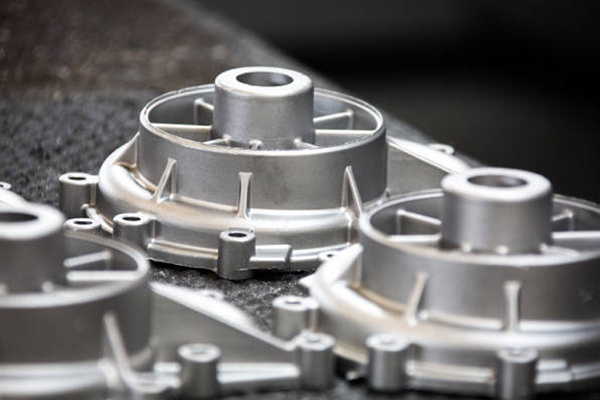
If you are looking for a reliable die-casting manufacturer, EDT Die-Casting Technology (Suzhou) Co., Ltd. is your ideal choice.
We specialize in zinc and aluminum alloy die casting, incorporating advanced European die-casting technology and management systems. Our fully automated melting, die-casting, processing, and inspection equipment ensure that every product meets high-quality standards.
Whether it's complex structural parts, high-precision enclosures, or components with special material requirements, we provide end-to-end solutions from mold development to finished product delivery through scientific process design and rigorous production control.
Choosing EDT means choosing quality, efficiency, and trust!
Contact us today for more product information and technical consulting.
Hotline
0512-67371602
E-mail:sales@edt-china.cn
Add:West Building, 66 Songshan Road, Suzhou New District, P.R. China

Hotline