
In modern manufacturing, die casting has become a widely adopted metal forming technology thanks to its efficiency, precision, and ability to produce complex parts. Among various die casting processes, hot chamber die casting stands out for its high level of automation and short cycle times, making it a preferred choice for small and medium-sized precision parts. Compared with cold chamber die casting, hot chamber casting has distinct principles, material limitations, and application fields. This article provides an in-depth overview of its working principles, advantages, limitations, applications, and comparison with cold chamber die casting.
1. Process Flow
The hot chamber die casting process typically includes:
1. Melting and Holding – The alloy is melted in a furnace integrated with the machine and maintained at a constant temperature.
2. Injection and Filling – The plunger forces molten metal through a gooseneck tube into the die cavity.
3. Solidification and Cooling – The metal cools rapidly in the die cavity, forming the required shape.
4. Ejection – The die opens, ejector pins push the part out.
5. Repetition – The die closes, and the cycle restarts.
This process is highly automated, with each cycle typically taking around 30 seconds.
2. Equipment Structure
A hot chamber die casting machine generally consists of:
· Injection system: gooseneck tube and plunger for transferring molten metal.
· Clamping system: ensures the mold remains closed under high pressure.
· Heating and holding furnace: maintains the molten state of the alloy.
· Hydraulic and control system: manages injection, clamping, and ejection precisely.
3. Suitable Materials
Hot chamber die casting is mainly used for low-melting-point alloys, such as:
· Zinc alloys – most common, ideal for small, complex parts.
· Magnesium alloys – lightweight with high strength.
· Lead, tin, and their alloys – for specific applications.
Due to temperature limitations of the equipment, aluminum die casting is typically performed with cold chamber machines, though some modified hot chamber systems can handle low-melting aluminum alloys.
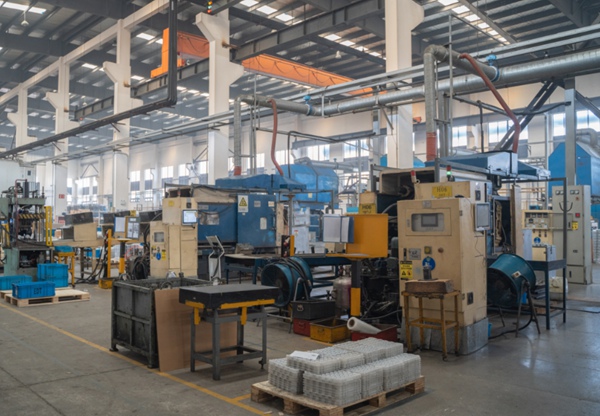
1. High efficiency – integrated furnace and injection system shorten cycle times, ideal for mass production.
2. Stable quality – molten metal is not transferred externally, reducing oxidation and contamination.
3. High dimensional accuracy – achievable tolerances reach IT13–IT15, with surface roughness of Ra1.6–3.2 μm.
4. Thin-wall capability – can produce parts as thin as 0.5 mm.
5. Automation-friendly – compatible with robots, spraying systems, and automatic handling, reducing labor costs.
1. Restricted material range – limited to low-melting alloys, unsuitable for aluminum, copper, and other high-melting metals.
2. Wear and corrosion – gooseneck and injection components are constantly immersed in molten metal, leading to shorter service life.
3. Mold durability – requires high-quality tool steels with surface treatments to withstand thermal stress.
4. Size limitations – typically used for small and medium-sized parts, generally less than 10 kg.
Hot chamber die casting is widely applied in:
· Automotive industry – carburetor housings, lamp brackets, door lock parts (mainly zinc die castings).
· Electronics – mobile phone components, camera housings, computer connectors.
· Hardware and consumer goods – zippers, locks, decorative parts.
· Precision machinery – gears, bearing housings, valve bodies.
According to data from the International Die Casting Association, over 70% of global zinc alloy die casting production is carried out using hot chamber machines.
Aspect | Hot Chamber | Cold Chamber |
Materials | Zinc, magnesium, lead, tin | Aluminum, copper, magnesium, high-melting alloys |
Efficiency | High, short cycle time | Lower, requires manual or automatic ladling |
Part Size | Small and complex | Medium to large structural parts |
System | Integrated gooseneck submerged in molten metal | Separate furnace, molten metal ladled into shot sleeve |
Applications | Electronics, small auto parts | Engine blocks, transmission cases, structural parts |
Rather than competing, hot and cold chamber die casting complement each other depending on material and application needs.
1. Eco-friendly alloys – reducing or eliminating hazardous metals such as lead and cadmium.
2. Advanced high-temperature systems – enabling partial use of aluminum alloys in hot chamber machines.
3. Smart manufacturing – integration with robots, IoT sensors, and real-time monitoring.
4. Precision and micro-die casting – addressing lightweight, miniaturized components in automotive and electronics.
According to MarketsandMarkets, the global die casting market is projected to reach USD 128 billion by 2030, growing at a CAGR of about 6.2%. Hot chamber die casting will remain an essential process within this expanding market.
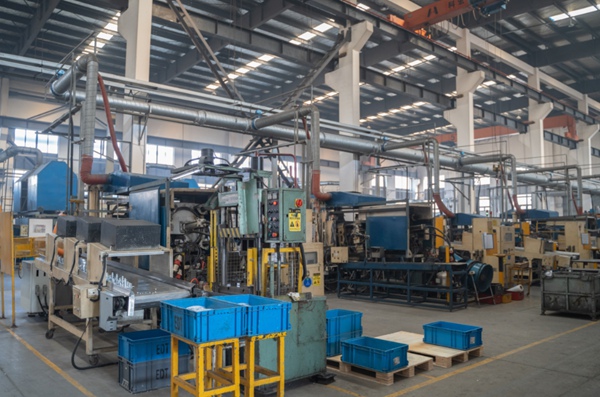
Hot chamber die casting offers unmatched speed, precision, and cost-efficiency for small to medium-sized low-melting alloy parts. Although limited by material range and part size, it has proven indispensable in industries such as automotive, electronics, and hardware. With continued advancements in eco-friendly alloys, intelligent automation, and precision manufacturing, hot chamber die casting will play an even greater role in the future of high-quality, large-scale production.
For die casting manufacturers, choosing the right process—whether hot or cold chamber—determines not only production efficiency but also product quality and long-term competitiveness.
EDT Diecasting Technology (Suzhou) Co., Ltd., as a professional aluminum die casting manufacturer, brings advanced European die casting technology to China. We are committed to providing customers with high-quality die cast parts. Equipped with state-of-the-art melting, casting, and inspection facilities, we strictly control every production stage to ensure consistent product quality. Whether for complex structural components or high-precision housings, we deliver reliable solutions through scientific processes and rigorous standards.
Choose EDT, choose quality and trust!
Hotline
0512-67371602
E-mail:sales@edt-china.cn
Add:West Building, 66 Songshan Road, Suzhou New District, P.R. China

Hotline